UL 508A Explained: Why Industrial Control Panels Need It
10 min read · Last updated September 15, 2026
Why UL 508A exists, what can go wrong without it, and how to get a properly evaluated industrial control panel — explained without the compliance jargon.
An industrial control panel is meant to disappear into the background: power on, machine runs, nobody thinks about the cabinet.
The reason customers ask for UL 508A is not because they want more paperwork. They want a panel that can be installed, inspected, energized, and supported without becoming the thing that holds up the project.
UL 508A gives a custom control panel a recognized path to acceptance. It is the safety standard used to evaluate how an industrial panel is designed, assembled, marked, and documented. When the finished panel carries the appropriate third-party mark, an AHJ, end user, or OEM is not starting from a cabinet full of unknowns. They have evidence that the assembly was built to a known North American safety standard.
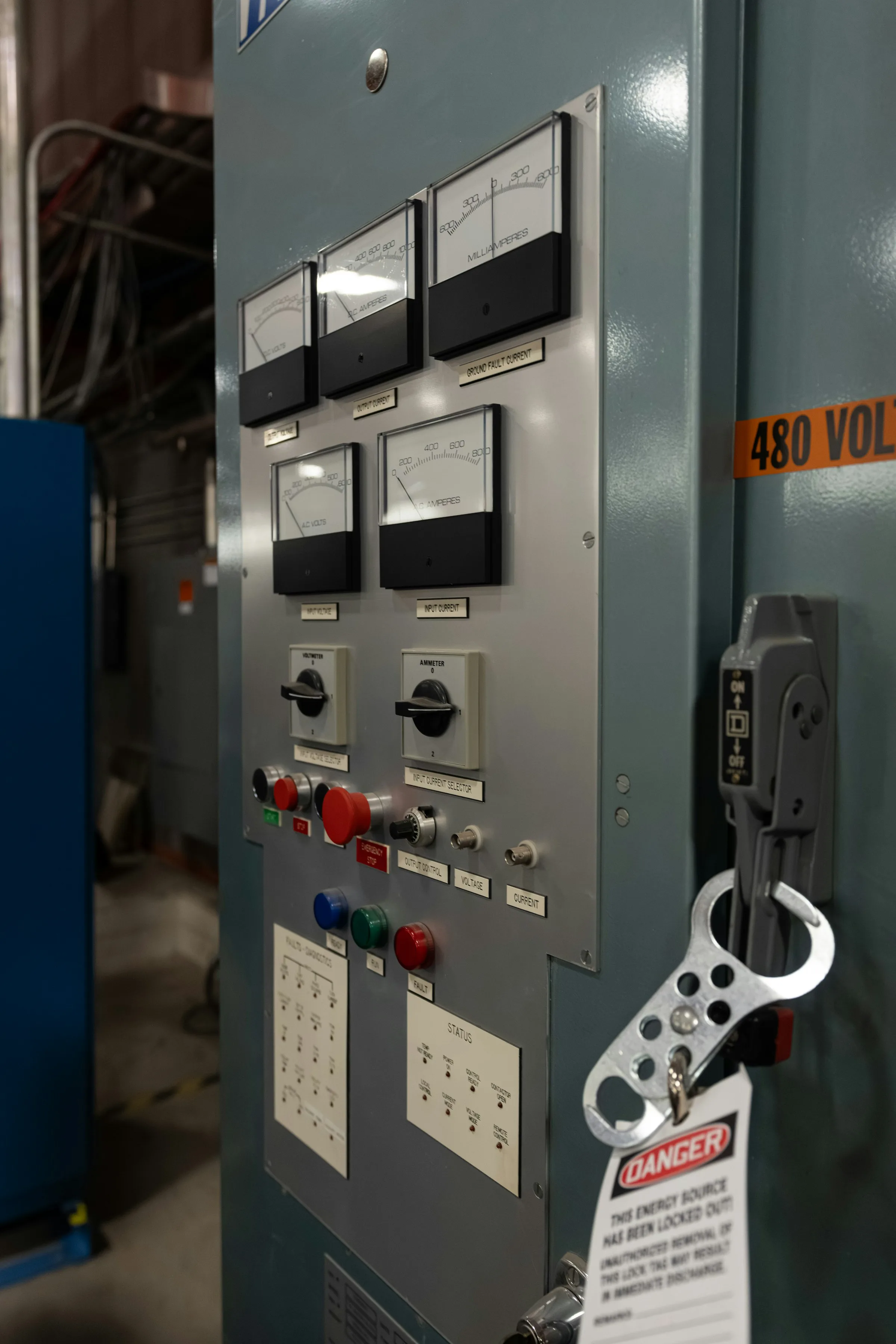
Photo by Eric Stoynov on Unsplash.
It is not a magic sticker, and it is not liability insurance. It does not prove the PLC code is correct or that the machine will make good product. What it does is remove a major category of uncertainty from the project: the electrical assembly has a defined, inspectable safety path. The parts are used appropriately, the conductors and spacings are right, the enclosure suits the job, fault current has been considered, and the cabinet says what it is safe to connect to.
That is the advantage: less argument at acceptance, fewer surprises at startup, and a panel that is easier to own for its whole life.
The Short Version
| The question | The useful answer |
|---|---|
| What are you buying? | A recognized, third-party-backed path for a custom electrical assembly to be accepted and safely installed. |
| Why do you need it? | It reduces commissioning and inspection uncertainty while addressing the assembly-level hazards that individual component labels cannot cover. |
| What happens without it? | More engineering due diligence for the buyer and AHJ, plus a higher chance of rework, startup delay, fault damage, and a rejected cabinet. |
| What does it save? | Time at the job site. The mark, ratings, and documentation give the installer and inspector a known starting point instead of a one-off design to unravel. |
| How do you get it? | Define the installation early; have a qualified shop build it under its certification program, or arrange a field evaluation for a one-off. |
Where UL 508A Came From
Before modern PLCs, industrial control was physical. Relays, timers, motor starters, fuses, pushbuttons, and miles of wire made machines run. As factories became more automated, those individual devices started living together in increasingly dense cabinets.
The individual pieces could be evaluated on their own. But that did not answer the harder question: what happens when you assemble them into one enclosure?
A contactor can be properly rated and still be installed with the wrong wire. A drive can be listed and still overheat in a cramped cabinet. A breaker can have a high interrupting rating while another device downstream limits the whole panel's ability to withstand a fault. And a perfectly safe cabinet is not useful if the installer cannot tell its voltage, full-load current, SCCR, or permitted environment from its nameplate.
UL 508A grew out of that assembly problem. Its purpose is not to make controls bureaucratic. Its purpose is to make a custom-built electrical cabinet predictable — to the person building it, the installer connecting it, the inspector reviewing it, and the technician opening it years later.
The NEC made industrial control panels especially visible when it added Article 409 in the 2005 edition. That put practical weight behind a simple idea: industrial panels need ratings and markings that fit the installation, especially their Short-Circuit Current Rating (SCCR).
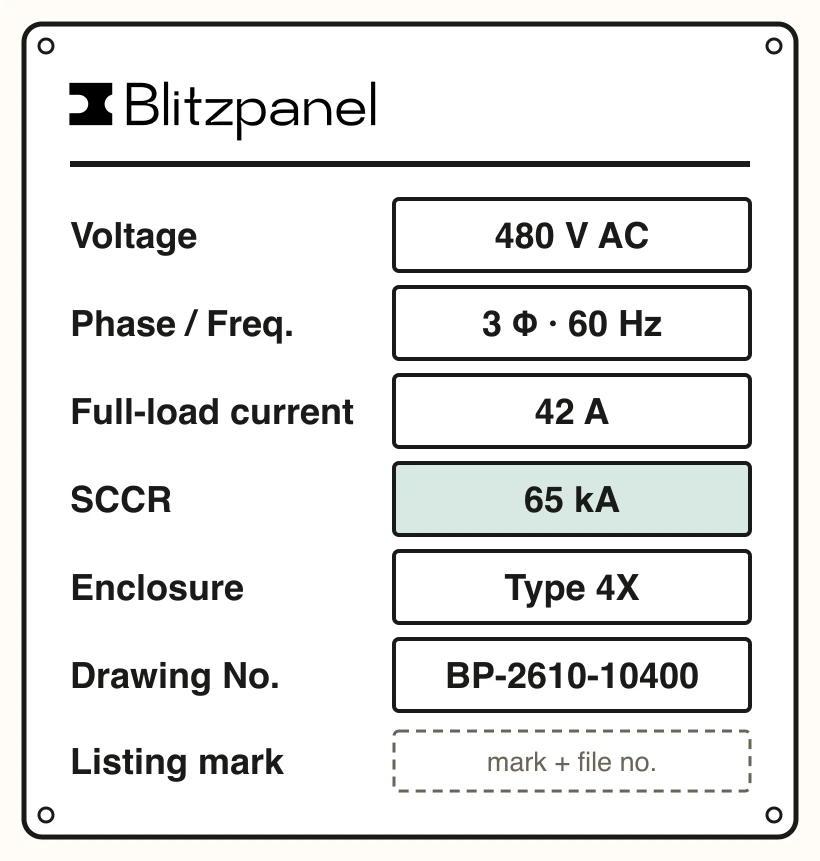
Example nameplate. Values are illustrative.
What each rating on the nameplate tells the installer and inspector:
- Voltage, phase, and frequency: the supply the panel must be connected to.
- Full-load current: what the feeder to the panel has to be sized for.
- SCCR: the fault current the panel can safely withstand. It must be at least the available fault current where the panel is installed.
- Enclosure type: where the panel can go: indoor, washdown, or outdoor.
- Drawing number: ties the cabinet to its schematics.
- Listing mark: shows the panel was evaluated by a third party, with the shop's file number.
What UL 508A Gets You
A Faster Inspection
The inspector still checks that the panel arrived undamaged, the marked ratings fit the site, and the field connections are right. What they don't have to do is re-check every component choice inside the cabinet. The mark tells them which standard the panel was built and evaluated to. It doesn't guarantee approval everywhere, but it is the path most North American inspectors already know.
Problems Found on Paper, Not on Site
A custom panel has its own voltage, loads, fault current, ambient temperature, and enclosure. UL 508A makes the builder account for those before parts are ordered, instead of finding a problem once the cabinet is wired or already beside the machine.
A Panel the Next Technician Can Follow
Accurate ratings, wire numbers, terminal labels, and drawings let someone who never met the designer troubleshoot the panel, or tell whether a replacement part or field change keeps it within its listing.
Fewer Questions From Customers
Many customers in the U.S. and Canada require a UL 508A panel before they accept equipment. A marked panel answers that question up front.
Why the Standard Is Necessary
Industrial panels contain three things that do not forgive improvisation: electrical energy, heat, and people.
1. Fault Current Is Much Bigger Than Normal Current
A motor branch that normally carries 12 amps can see tens of thousands of amps during a short circuit. The available fault current depends on the facility's electrical system, not on how tidy the inside of the cabinet looks.
The panel's SCCR has to meet or exceed the available fault current at the installation point. If it does not, a fault can destroy components before an upstream protective device clears it. This is why the SCCR is an assembly rating, not a number you borrow from the biggest breaker in the panel.
Our SCCR walkthrough shows how the weakest component or branch can set the rating for the entire cabinet.
2. Heat Adds Up Inside a Closed Box
Power supplies, contactors, transformers, VFDs, and PLC power supplies all create heat. Put enough of them into a small enclosure, place it in a hot room, or block the intended airflow, and devices can run beyond their temperature ratings.
That shortens component life at best. At worst, insulation breaks down, terminals loosen, or a component fails under load. The panel has to be designed for the real ambient temperature and enclosure location, not just a comfortable office.
3. Component Labels Are Conditions, Not Permission Slips
This is the one that surprises people. A UL Listed or Recognized component is not a universal building block. Its marking comes with conditions of acceptability: voltage, current, wire size, mounting method, enclosure, spacing, protective device, and sometimes a specific tested combination with other parts.
A common misconception is that filling a cabinet with UL Listed parts makes the panel "UL listed." It doesn't. Two examples of UL-marked parts that are easy to use in the wrong place:
- Supplementary protectors. A UL 1077 supplementary protector looks like a small breaker and carries a UL mark, but it can't be used as branch circuit protection. That job needs a UL 489 breaker or a listed branch-rated fuse.
- Power distribution blocks. Many parts sold as "power distribution blocks" are really UL 1059 terminal blocks. On the feeder side of a 480V panel, UL 508A calls for 1" through air and 2" over surface between live parts of opposite polarity. A UL 1953 listed power distribution block is built for those spacings; most UL 1059 terminal blocks are not (Bussmann's spacing guide lays out the difference).
The builder has to preserve those conditions in the finished assembly. That is the gap between "we used UL parts" and "this is a properly evaluated panel."
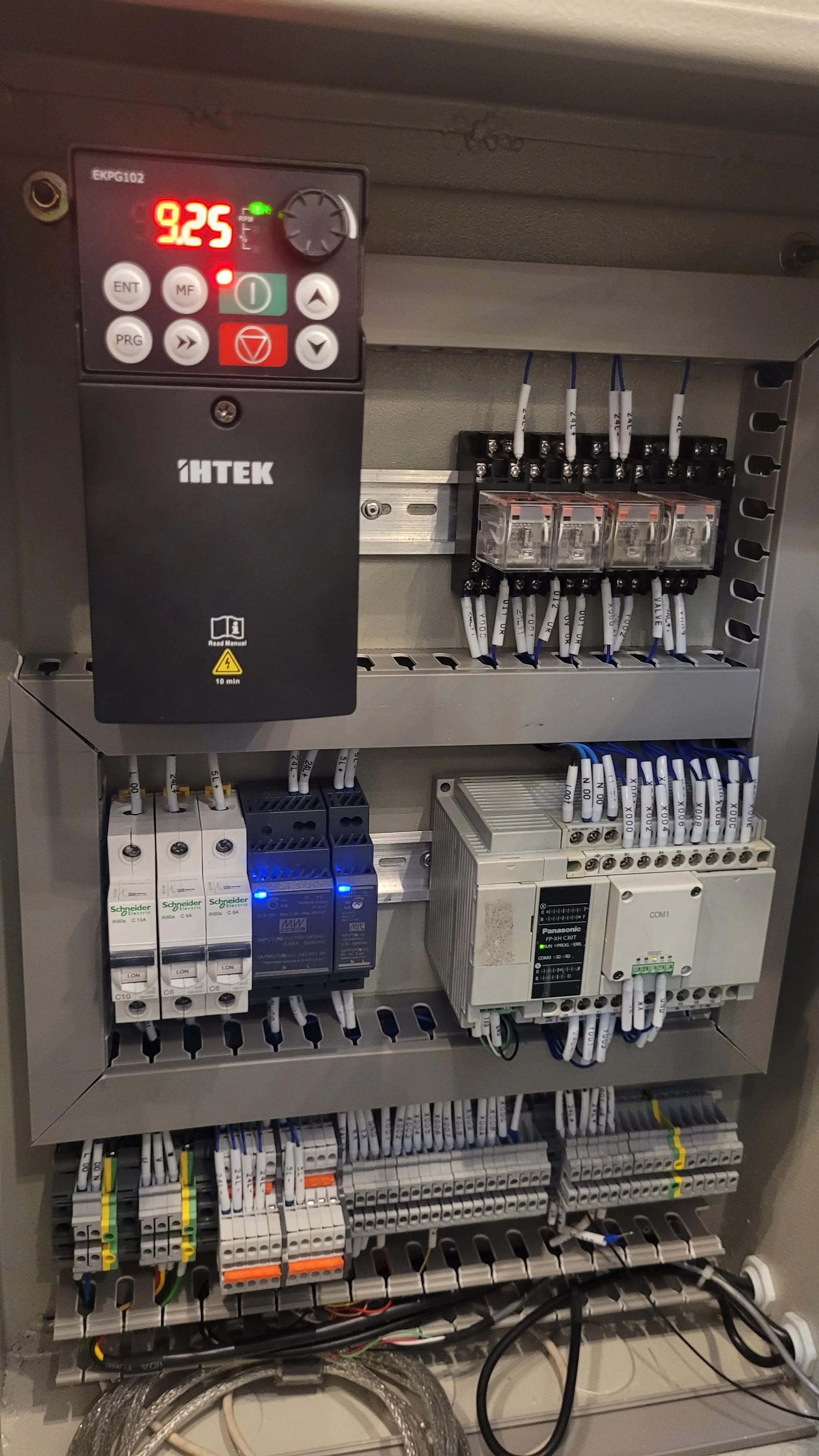
Photo by Angga Panca Alam Anugrah, CC BY-SA 4.0.
4. A Cabinet Has to Be Safe for the Next Person Too
The person opening a panel after a breakdown may not have the original engineer standing beside them. Clear wire identification, terminal labels, drawings, enclosure markings, and a truthful nameplate turn a repair into a controlled task instead of a guessing game.
Good compliance and good serviceability are the same instinct: make the next person's job safer.
What You Risk by Skipping It
Skipping the work does not guarantee a failure. It does mean you are accepting blind spots that are cheap to resolve before fabrication and expensive to resolve afterward.
| Risk | What it looks like in real life |
|---|---|
| Failed inspection | The AHJ, customer, or site safety team cannot accept the panel until missing ratings, markings, or construction issues are resolved. |
| Startup delay | A machine sits waiting while a panel is modified, re-inspected, or field evaluated. The cost is usually measured in lost schedule, not just parts. |
| Fault damage | The panel SCCR is below the available fault current, so a short circuit can damage equipment or create an arc-flash and fire hazard. |
| Heat-driven failures | Tight layout, a hot environment, or inadequate cooling ages components early and makes intermittent failures hard to diagnose. |
| Unsafe maintenance | Poor identification, undocumented live circuits, or inaccurate drawings make a routine service visit more dangerous. |
| Ownership gaps | After handoff, nobody can show what was built, what ratings apply, or whether a replacement part preserves the original design. |
There is also a commercial risk. Many OEMs, end users, insurers, and customers will require an appropriately marked panel before they accept equipment. Finding that out after the cabinet is wired is the expensive version of compliance.
UL Listed Parts vs. a UL 508A Panel
Here is the distinction worth remembering:
A component can be evaluated on its own. A control panel has to be evaluated as a system.
| Level | What it means | What it does not mean |
|---|---|---|
| Component marking | A breaker, contactor, power supply, or terminal block was evaluated for a defined use. | It can be used any way you want in any cabinet. |
| Panel design | The parts, wiring, protection, thermal layout, and enclosure have been selected to work together. | The final cabinet has automatically received a certification mark. |
| Panel mark or field label | The completed assembly has an evaluation path tied to the applicable requirements. | The machine, process, or field installation is automatically approved. |
UL 508A is concerned with that middle layer: the assembly. It does not evaluate the controlled motor, heater, pump, or entire machine unless another program or standard covers that larger equipment.
How You Actually Get a UL 508A Panel
There are two normal routes. Which one makes sense depends on whether this is a repeatable product or a one-off rescue.
Route 1: Build Through a Qualified Panel Shop
For most custom panels, this is the practical route.
- Define the application. Incoming voltage, phase, frequency, available fault current, loads, environment, and any customer or AHJ requirements.
- Design the assembly. Select components, calculate SCCR, account for heat, plan wiring and clearances, and create drawings.
- Build under the shop's documented procedures. A qualified panel shop works within its certification program and is subject to periodic follow-up inspection.
- Apply the authorized mark when the finished panel meets the applicable requirements.
- Ship the documentation with the panel. Schematics, bill of materials, terminal information, ratings, and as-built records should agree with the cabinet.
This is the cleanest route because compliance decisions happen while there is still time to change the design.
Route 2: Field Evaluate a Specific Finished Panel
A Nationally Recognized Testing Laboratory can inspect a completed panel and apply a field-evaluation label if it passes. This route is often used for a one-off panel built outside a listed shop program, a legacy cabinet, or an already-installed assembly.
It can be the right answer. It is rarely the fast or inexpensive answer. The evaluator may find a component, spacing, marking, or documentation issue that requires rework, then a return inspection. Build-to-standard first; field evaluation is a path, not a shortcut.
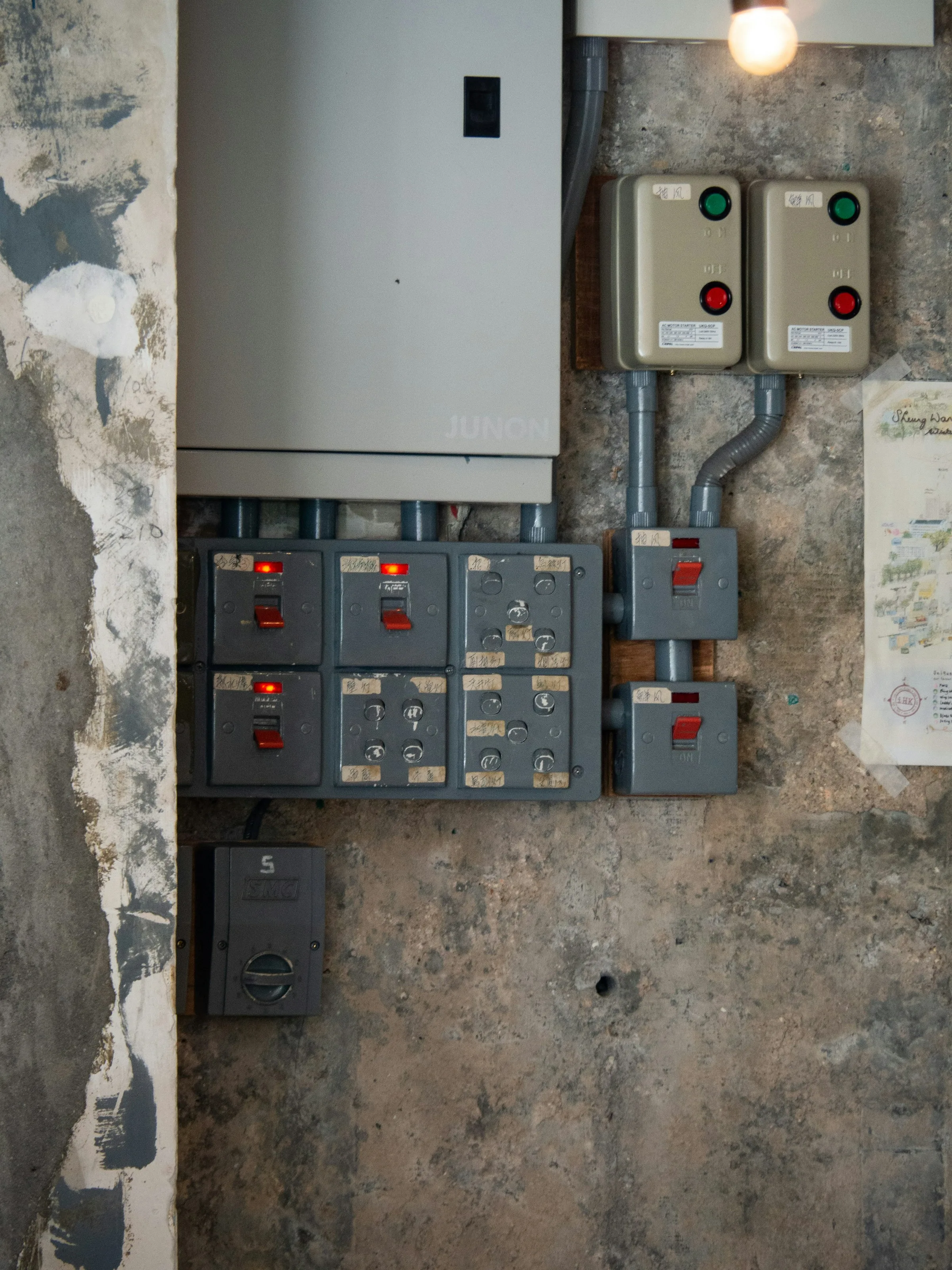
Photo by Sirius Harrison on Unsplash.
What to Give Your Panel Builder Before They Start
The fastest way to get a compliant panel is to give the builder the information that changes the design before parts are ordered:
- Incoming power: voltage, phase, frequency, and available fault current
- Motor, heater, VFD, and other load details
- I/O list and sequence of operations
- Site environment: indoor/outdoor, ambient temperature, washdown, corrosives, vibration, or hazardous-area classification
- Enclosure location, field-wiring method, and disconnect expectations
- Customer specification, AHJ requirement, or insurance requirement calling for a particular mark or standard
An I/O list is a strong starting point. It lets the controls engineer turn the real field devices into PLC hardware, terminal counts, power supplies, and wiring plans instead of filling the cabinet with assumptions.
Questions to Ask Before You Buy
If a quote says "UL 508A," ask these questions before you release the purchase order:
- Will this exact panel ship with an appropriate certification mark or field-evaluation label?
- What SCCR will be marked, and what available fault current is the design based on?
- What enclosure type and ambient temperature is the design based on?
- Are there special conditions — washdown, outdoor exposure, corrosion, hazardous area — outside an ordinary indoor installation?
- Which drawings and as-built documents are included?
- Who confirms the final installation requirements with the AHJ?
If the answer is only "we use UL parts," keep asking. A good builder can explain the finished panel, not only the catalog pages.
Frequently Asked Questions
What is UL 508A?
UL 508A is the Standard for Industrial Control Panels. It sets requirements for the construction and evaluation of industrial panel assemblies, including components, wiring, enclosure, markings, and short-circuit current rating.
Is UL 508A required by law?
The requirement depends on the jurisdiction, application, customer, insurer, and AHJ. In many commercial and industrial projects, an appropriately marked panel is the clearest path to acceptance. Confirm the project requirement before design release.
Is a panel made from UL-listed components automatically UL 508A compliant?
No. Individual components have their own conditions of use. The completed panel must still be designed and evaluated as an assembly.
What is the difference between UL 508 and UL 508A?
UL 508 covers industrial control devices such as relays, pushbuttons, switches, and motor controllers. UL 508A covers the industrial control panel assembly that uses those devices.
Does every industrial control panel need an SCCR?
Industrial control panels are generally marked with an SCCR, and the panel SCCR must be at least the available fault current at its installation. The calculation depends on the specific components and protective devices in the finished panel.
What if I have to modify a panel after it has been listed and installed?
Treat it as an engineering change, not a bench repair. A like-for-like replacement using the same approved part and wiring method may preserve the original design. Changing a component type, protective device, conductor size, enclosure, load, supply voltage, or control circuit can change the panel's safety basis, SCCR, heat, markings, or the conditions under which the original mark was applied. Review the change with the original panel builder or a qualified electrical engineer before making it. If the panel has been materially modified in the field, the AHJ, owner, or insurer may require a field evaluation before it is energized again.
Can UL 508A cover a hazardous-location panel?
Not by ordinary-location evaluation alone. Hazardous-location and intrinsic-safety applications can require additional or different standards and protection methods. Give the builder the written area classification early so the correct path can be selected.
Resources
Calculate Your Panel SCCR
Start With an I/O List
Get the free I/O list template →
Build Your Control Panel
Start a project with Blitzpanel →