Class I, Division 2 Panels: The Air Around Your Control Panel Might Explode
11 min read · Last updated August 25, 2026
A guide to Class I, Division 2 hazardous-location panels: what the rating means, the protection methods available, and how certification actually works.
Ordinary control panels are built on a quiet assumption: the air around them is safe. Strike a small spark inside the enclosure and nothing happens, because there's nothing in the air to ignite.
In many industrial settings, that assumption is wrong. Refineries, chemical plants, fuel depots, and many more places host flammable gas in the atmosphere. Put an ordinary panel there, and you've installed an ignition source next to a fuel supply. Boom. Your factory is rubble.
Class I, Division 2 is a hazardous-location rating describing such scenarios: one where flammable gas can be present. The Class I, Division 2 Panels built for it have to handle environments that could turn a factory to rubble. This article will run through the strategies panel engineers use to avoid these disasters.
Decoding the Label: Class, Division, Group, Temperature
Let's unpack the system behind the "Class I, Division 2" label. Each part answers a specific question. Under the U.S. National Electrical Code (NEC Article 500), a full classification tells you four things:
| Part | Question it answers | What it means |
|---|---|---|
| Class | What is the hazard? | Class I = flammable gases or vapors (propane, gasoline vapor, hydrogen). Class II = combustible dust. Class III = ignitable fibers. |
| Division | How often is it present? | Division 1 = expected during normal operation (ex: flammable gas in factory atmosphere). Division 2 = present only under abnormal conditions (a leak, spill, failed seal, or ruptured container). |
| Group | Which substance? | For Class I: A = acetylene, B = hydrogen, C = ethylene, D = common industrial gases like propane and methane. Each group ignites differently. |
| Temperature (T-code) | How hot can the equipment get? | Every device has a max surface temperature, which must stay safely below the autoignition point of the surrounding gas. A hot surface can ignite the atmosphere just like a spark. |
So "Class I, Division 2, Group D, T6" is a compact way of saying: The hazard is flammable gas, present only during upsets, of the propane family, with equipment that never gets hot enough to be a problem (T6 is equipment that never exceeds 85°C, so it is non-incendiary).
What Makes "Division 2" Particularly Interesting
Fire needs three things: fuel, oxygen, and an ignition source. In a flammable-atmosphere environment, you can't remove the fuel (that's why it's a flammable-atmosphere environment), and you can't remove the oxygen (that's the air). So most hazardous-location panels are really one exercise: eliminate the ignition source.
Here's what makes Division 2 special. Because the flammable atmosphere is only present abnormally (rarely, briefly), you get a variety of protection strategies that Division 1 doesn't allow.
Division 1 forces you toward the heavyweight solutions, most famously the explosion-proof enclosure: a cast, thick-walled housing built to contain an internal explosion so it can't spread to the room outside. It works, but it's expensive, heavy, and awkward to work in.
Division 2 lets you get clever instead.
Class 1, Div 2 Panel Designs
For a Class I, Division 2 panel, you have several recognized ways to make the equipment safe. You pick whichever fits the design:
- Non-incendive equipment. Components built so that, in normal operation, they simply can't produce enough spark or heat to ignite the specified gas. (Covered under standards like UL 121201 / ANSI-ISA 12.12.01.)
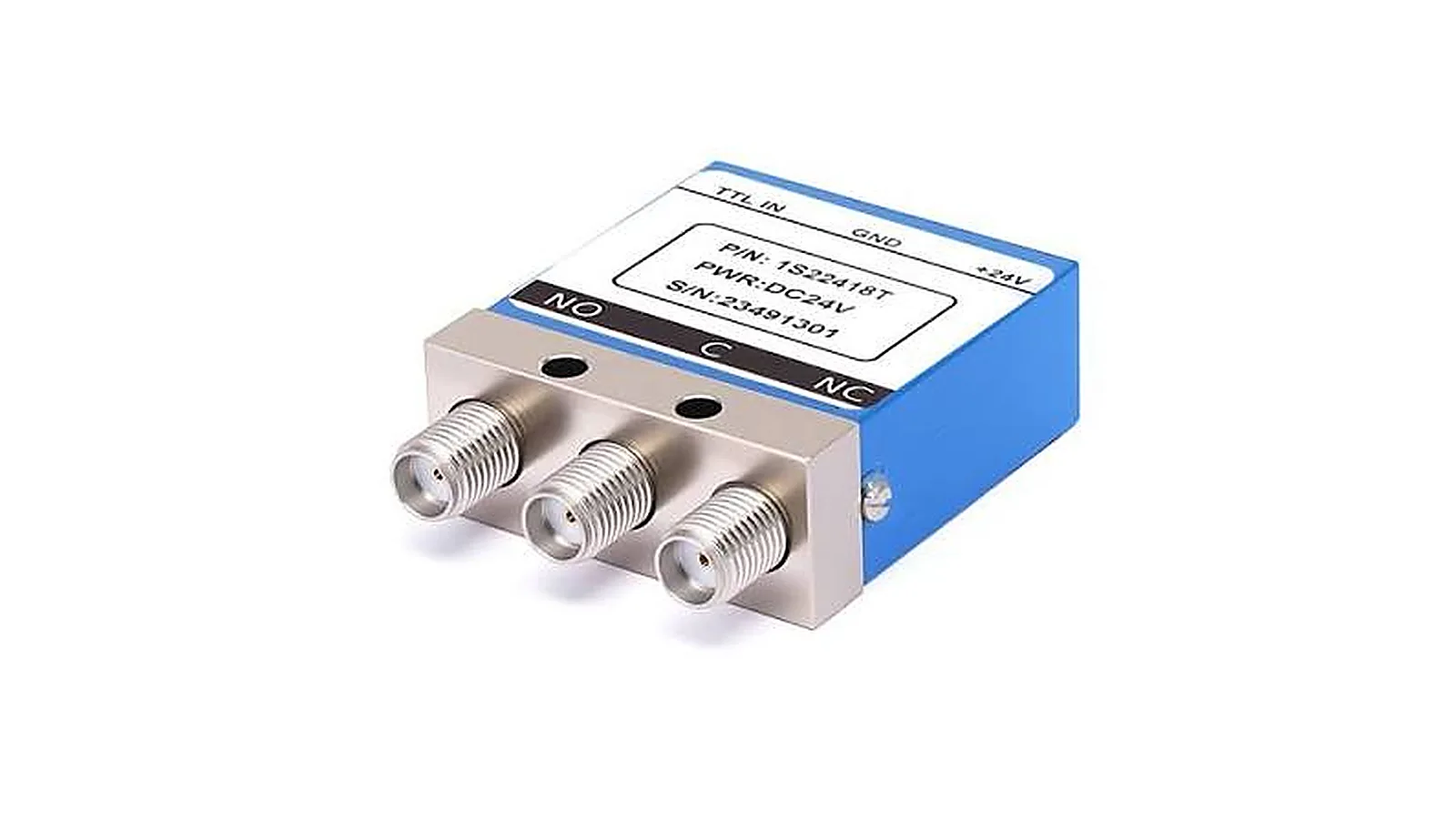
Non-incendive electromechanical relay
- Hermetically sealed or non-sparking devices. A relay or switch sealed against the atmosphere, or a device that makes and breaks contact without an exposed arc, removes the ignition risk at the component level.
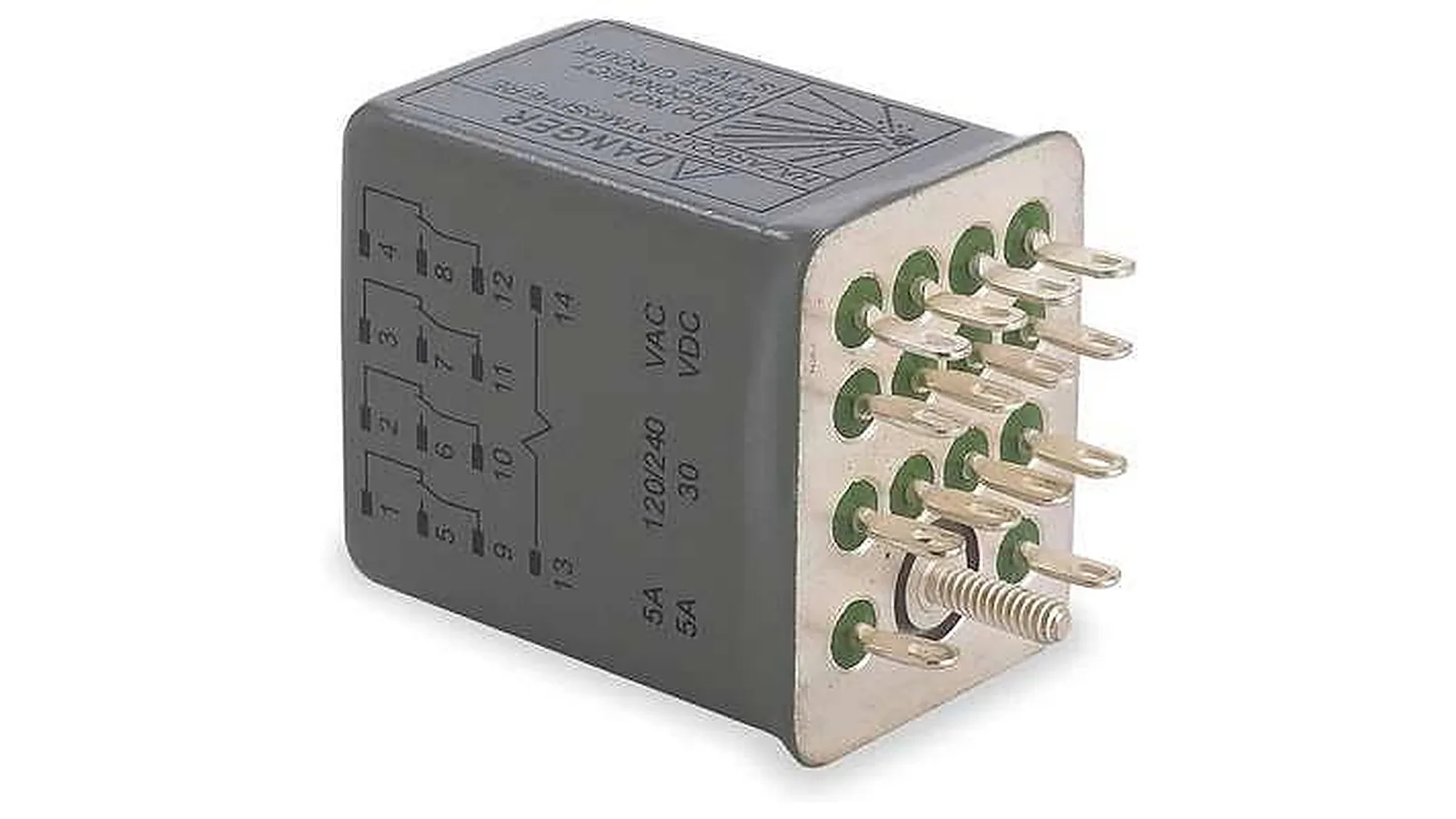
Hermetically sealed relay
- Purging and pressurization. Instead of protecting each part, you protect the whole box. A clean-air or inert-gas supply holds the enclosure at a slight positive pressure, so a flammable atmosphere physically can't get in. Governed by NFPA 496, and the most elegant trick in the toolkit. More on it below.
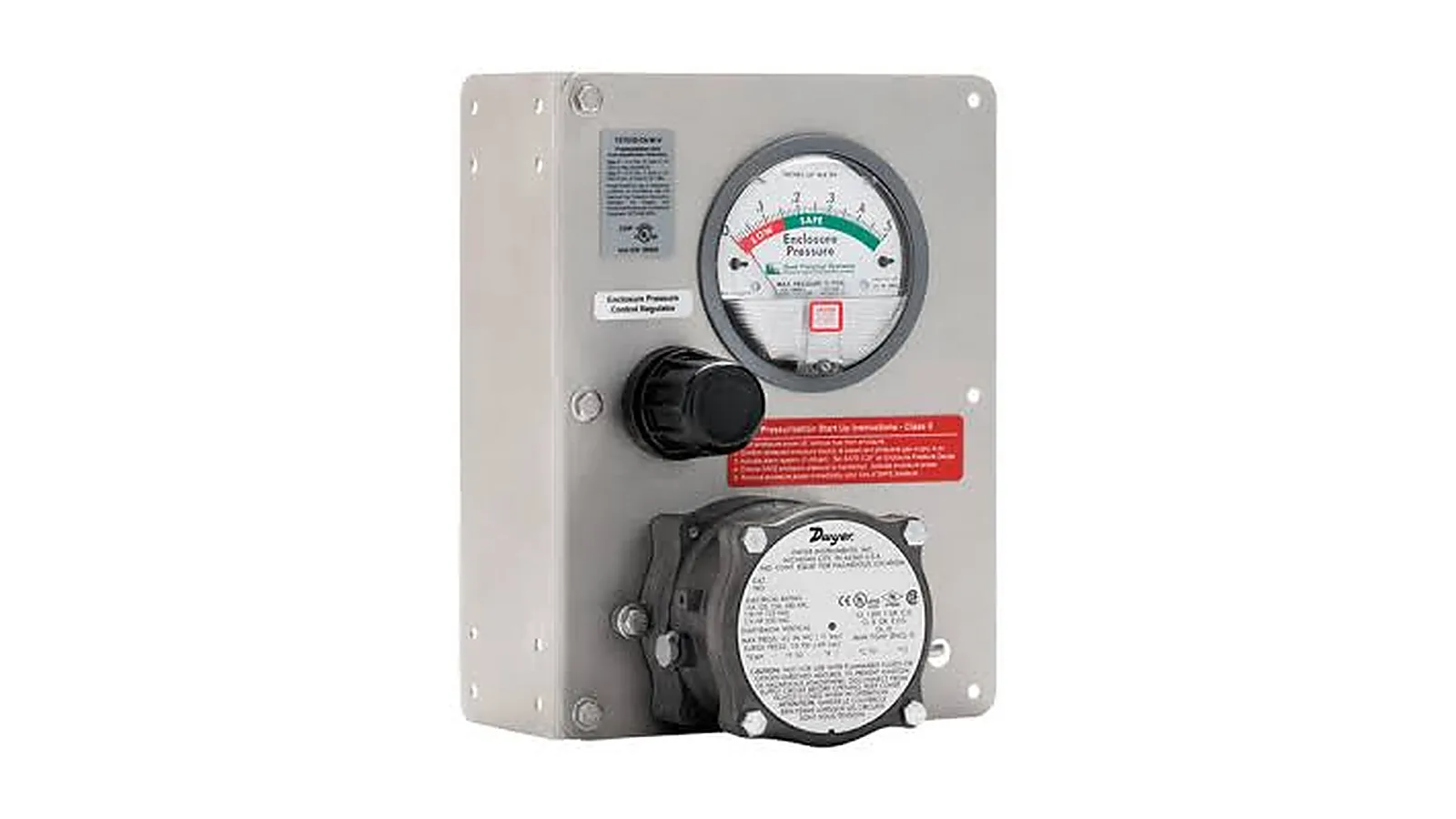
Vertically-mounted purging unit
- Intrinsic safety. For low-power field circuits (4-20 mA signals, sensors), energy-limiting barriers ensure that even a fault can't release enough energy to ignite anything. Popular for instrumentation.
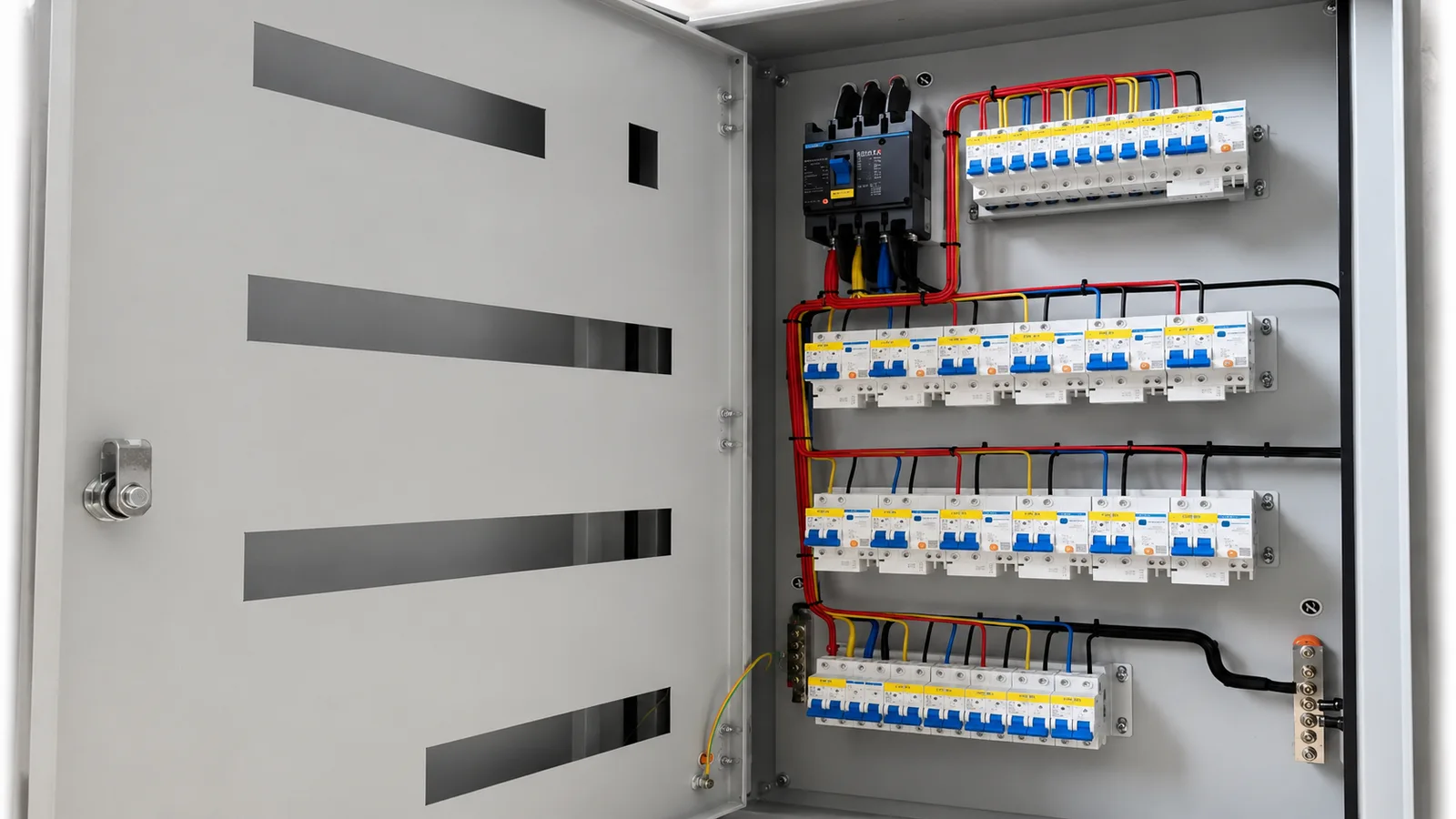
Low-power field circuit
- Explosion-proof enclosure. Still allowed in Division 2 (a device rated for Division 1 is always fine in Division 2), but usually more enclosure than the situation calls for.
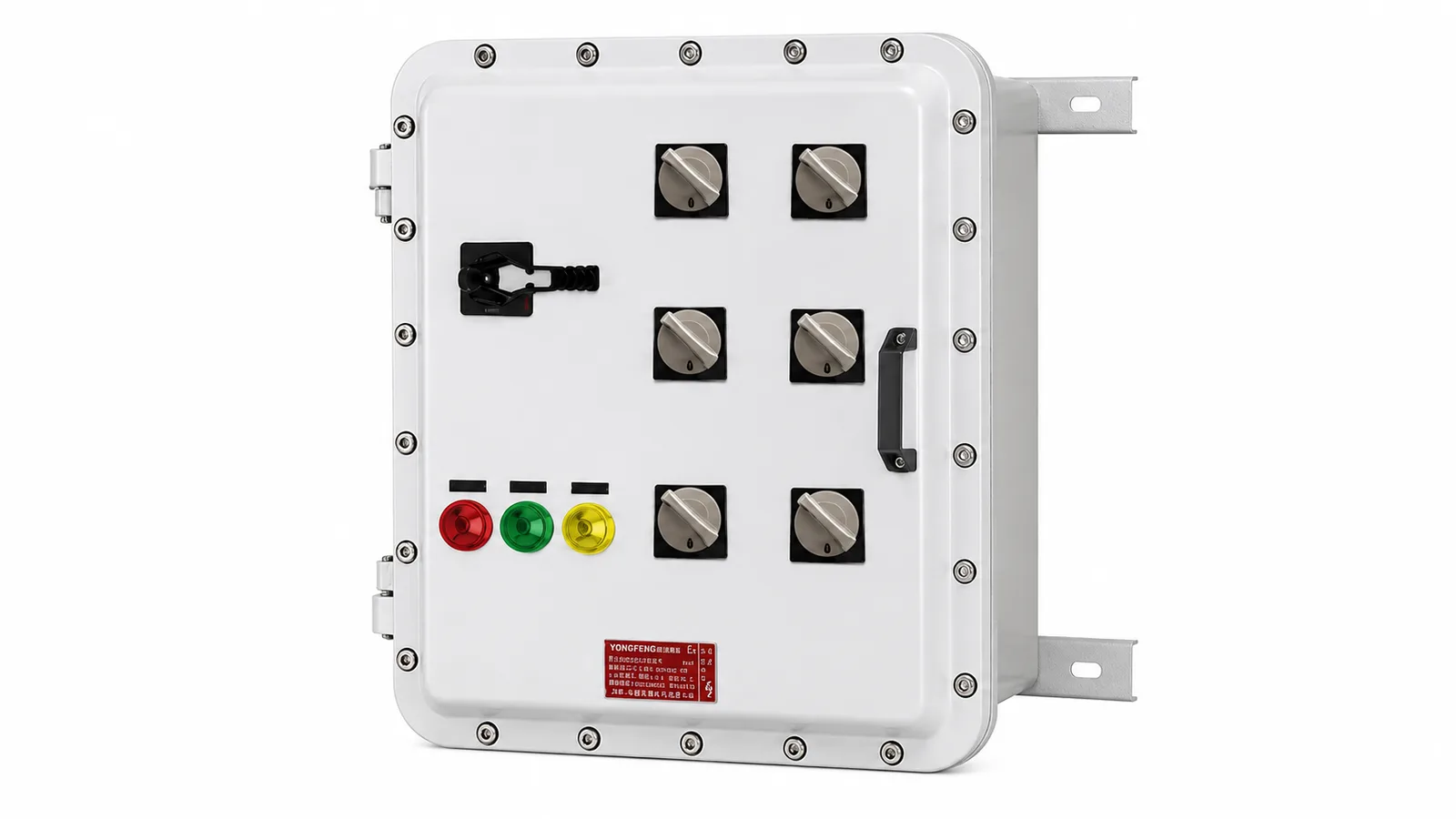
Explosion-proof enclosure
That last point is a useful buyer's rule of thumb: Division 1 equipment can always be used in Division 2, but Division 2 equipment can never be used in Division 1. The ratings only run one direction.
Picking the right method off this menu is where a good panel shop earns its keep. Not sure which one fits your area? Talk it through with an engineer.
Purging and pressurization deserves its own moment, because it's the strategy that lets an ordinary PLC live safely in a hazardous room. Everything else requires special components, or is overkill.
The idea: seal the enclosure, then feed it a steady supply of protective gas at a pressure slightly above the surrounding air. Any leak pushes clean gas out and never lets flammable gas in. On startup, the system first "purges," flushing several enclosure volumes of clean gas through the box to guarantee nothing flammable is trapped inside, and only then allows power on.
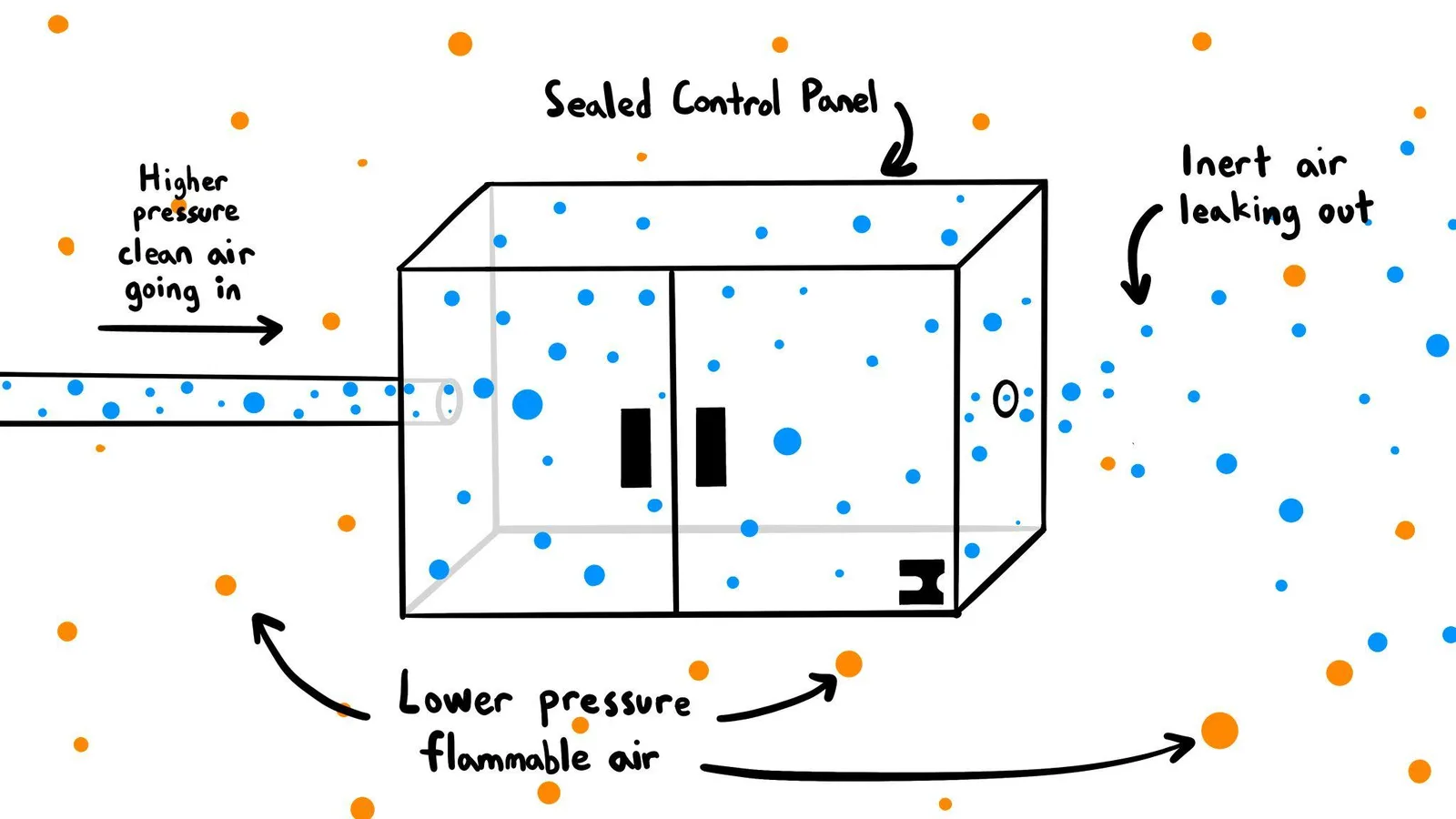
It's clever, and often far cheaper than speccing every component as explosion-proof. It's also unforgiving: a purge that's designed or plumbed wrong is a false sense of safety, which is worse than none. Want a design done right the first time? Start here.
What to Know Before You Spec One
If you're buying or specifying a Class I, Division 2 panel, a handful of things matter more than the rest:
You don't get to guess the classification. The Class, Division, and Group for a given area is a formal determination made by the facility owner, their engineer, or the Authority Having Jurisdiction (AHJ), and it should come to you in writing. A panel builder shouldn't be inventing the rating, and neither should you. Everything downstream depends on getting this right, and the liability for getting it wrong is severe.
The panel is only as compliant as its weakest component. One unrated device, one wrong terminal block, one part that runs too hot, and the whole panel's rating is compromised. Compliance isn't a sticker you add at the end. It's a property of every part inside.
The label is a legal document. A properly built hazardous-location panel is marked with its exact Class/Division/Group and temperature code. That marking tells the installer and the inspector precisely where the panel may legally be used.
Installation is part of the safety system. Even a perfect panel has to be installed correctly: sealed conduit fittings at the classified-area boundary, approved wiring methods, correct field terminations. The panel and its installation are one system, not two.
When in doubt, involve a PE. Hazardous-location design is one of the areas where a licensed Professional Engineer experienced in classified locations earns their fee. The downside of a mistake here isn't just a nuisance. It's an explosion.
How to Rate and Certify Your Panel
A hazardous-location panel has to clear two rating standards before certification.
The parts. Every component is tested and listed by a Nationally Recognized Testing Laboratory, an NRTL such as UL, Intertek (ETL), or CSA, and stamped with the Class, Division, Group, and T-code it's rated for. Anything sitting in the classified air must carry a rating that covers it, or live inside a protection method (a purge, for example) that keeps its surroundings unclassified.
The assembly. A box full of rated parts is not a rated panel. The finished assembly is judged as a system: wiring, spacings, the enclosure, terminals, and the combined heat of everything running at once, against UL 508A, Supplement SA (rated-component designs) or UL 698A (purged or intrinsically safe designs). It earns its own nameplate with its own marking. Panels built entirely from listed parts fail this bar all the time, usually on temperature rise.
The nameplate is where "certified" actually happens, and there are only two ways to earn it:
- Built under a listing program. A shop that holds an NRTL listing is authorized to apply the mark to panels it builds to the standard, under periodic audit. The label goes on in the shop, with no separate inspection of your individual panel.
- Field evaluation. An NRTL engineer comes to the panel, on a shop floor or at your site, inspects the built unit against the standard, and applies a field-evaluation label if it passes. This is the route for a panel that shipped without a mark, or one you built yourself.
Which of those applies decides what your job looks like.
If you buy from a panel shop like Blitzpanel
You supply the requirement; the shop supplies a labeled panel.
You provide a written area classification, Class, Division, Group, T-code, ambient temperature, and the specific gas or vapor. You can get this information from your engineer or AHJ. It's the one input needed from the buyer, and everything hinges on it, so the earlier you hand it to the people building your panel, the better.
The shop selects components rated for that classification (or designs the purge or intrinsic-safety barriers that let standard parts live there), builds to UL 508A SA or 698A, runs the T-code calculation so the box holds its rating under load, applies its listing mark, and delivers the documentation, schematics, bill of materials, and as-built, that proves the rating years later. Because the shop is already listed, certification is baked into the build rather than bolted on afterward.
If you build it yourself
The standard is the same, you're building to UL 508A SA or 698A either way, but you own every step, and certification happens after the build:
- Build to the standard, with every component rated for the classification and the assembly's temperature rise calculated, not assumed.
- Book a field evaluation with an NRTL (UL, Intertek, CSA). They inspect the finished panel against the standard.
- Fix and re-inspect whatever they flag, a single unrated part or an overheating enclosure fails the unit.
- Get the field label. That mark is what your AHJ looks for at installation.
Doing it in-house can pay off for a one-off when you already have the expertise. For anything repeatable, a listed shop is faster and cheaper, because you're not paying for a field evaluation on every unit.
Once you get the label
The label is necessary, but certification doesn't guarantee success. For whoever builds it:
- Check the nameplate matches your classification exactly, your specific Class / Division / Group / T-code, not "rated for hazardous locations" in the abstract.
- Install to code: conduit seals at the boundary (NEC 501.15), approved wiring methods, proper bonding and grounding. The panel and its install are one system.
- Commission the protection: if it's purged, prove the purge sequence, pressure switches, and interlocks work before first power-on.
- Get the AHJ's sign-off before the panel goes live, and don't swap in unrated parts later; one wrong component voids the rating.
Want a Class I, Div 2 panel that ships already labeled? Talk to Blitzpanel.
A Note on the Rest of the World
The Class/Division system is a North American convention. Much of the world, and increasingly North America too, uses the Zone system instead (IEC and ATEX standards, reflected in NEC Article 505). The rough translation: Division 2 corresponds to Zone 2. Division 1 splits into the more granular Zone 0 and Zone 1. If you're speccing equipment for an international project, or buying gear certified under the Zone system, that mapping is the bridge between the two worlds.
Conclusion
Most control panels are designed for a world that behaves. Class I, Division 2 panels are designed for the moment it doesn't. They're built for the leak, the spill, the failed seal, and they stay safe through it.
That's also why they reward being built by someone who does it deliberately. The difference between a compliant hazardous-location panel and a dangerous one isn't visible from across the room. It's in the component selection, the temperature margins, the purge design, the labeling, and the documentation: the same disciplined, repeatable process any good panel deserves, with the stakes turned all the way up.
At Blitzpanel, hazardous-location work is exactly the kind of build where that process pays for itself: rated component selection, correct marking, and clean documentation, built to the classification the project actually calls for. Let's build it right.
Frequently Asked Questions
What is Blitzpanel?
Blitzpanel is a UL-certified industrial control panel manufacturer. We design and build control panels that arrive wired, labeled, and fully documented, with clean schematics and an as-built package that stays accurate long after handoff, right down to the exact hazardous-location marking when a build calls for it. We also publish practical, engineer-facing content like this piece to help the people who spec, buy, and maintain panels make better-informed decisions.
What is a Class I, Division 2 area?
A Class I, Division 2 area is a location where flammable gases or vapors could be present, but only under abnormal conditions such as a leak, spill, or equipment failure. Under normal operation the atmosphere is safe, which is what separates Division 2 from Division 1, where the flammable atmosphere is expected routinely.
What is the difference between Class I Division 1 and Division 2?
The difference is how often the flammable atmosphere is present. In Division 1, it's expected during normal operation, so equipment must use heavyweight protection like explosion-proof enclosures or intrinsic safety. In Division 2, it's present only during abnormal events, which allows a wider and often less expensive set of protection methods. Equipment rated for Division 1 can always be used in Division 2, but Division 2 equipment can never be used in Division 1.
Does a Class I, Division 2 panel have to be explosion-proof?
No. Explosion-proof is just one of several acceptable protection methods for Division 2, and it's often more than the situation requires. A Division 2 panel can instead use non-incendive components, hermetically sealed or non-sparking devices, intrinsic safety for field circuits, or a purged and pressurized enclosure. The right choice depends on the design.
What is a purged and pressurized panel?
A purged and pressurized panel is a sealed enclosure kept at a slight positive pressure with clean air or inert gas, so a flammable atmosphere physically cannot get inside. Governed by NFPA 496, it first flushes the enclosure with several volumes of clean gas on startup, then maintains pressure during operation. For a Class I, Division 2 area, a Type Z purge reduces the inside of the box to unclassified, which lets you use ordinary general-purpose components in a hazardous location.
Can I use a regular PLC in a Class I, Division 2 panel?
Sometimes, but only inside an appropriate protection method. A standard PLC and standard components can live in a Division 2 area when housed in a Type Z purged and pressurized enclosure, because the purge reduces the interior to unclassified. Without that protection, every component would need to be individually rated for the classification.
Who decides the hazardous area classification?
The area classification is a formal determination made by the facility owner, their engineer, or the Authority Having Jurisdiction (AHJ), and it should be provided in writing. A panel builder does not guess the Class, Division, and Group, since everything about the panel's design depends on getting that classification right, and the liability for an error is severe.
What is the difference between Division 2 and Zone 2?
They describe the same kind of environment under two different systems. Division 2 comes from the North American Class/Division system (NEC Article 500), while Zone 2 comes from the international IEC and ATEX Zone system (reflected in NEC Article 505). Division 2 corresponds roughly to Zone 2, and the more hazardous Division 1 splits into Zone 0 and Zone 1.
Resources
Build Your Control Panel
Start a project with Blitzpanel →