Propulsion testing

Orbital Operations
Develops in-space mobility vehicles powered by cryogenic propulsion systems.
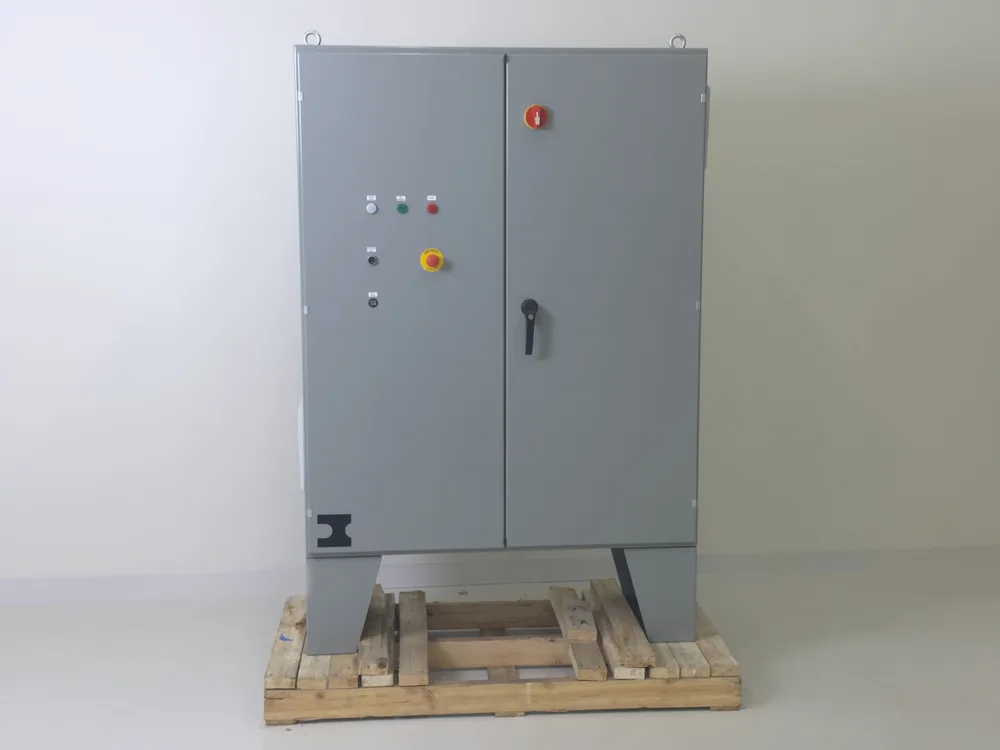
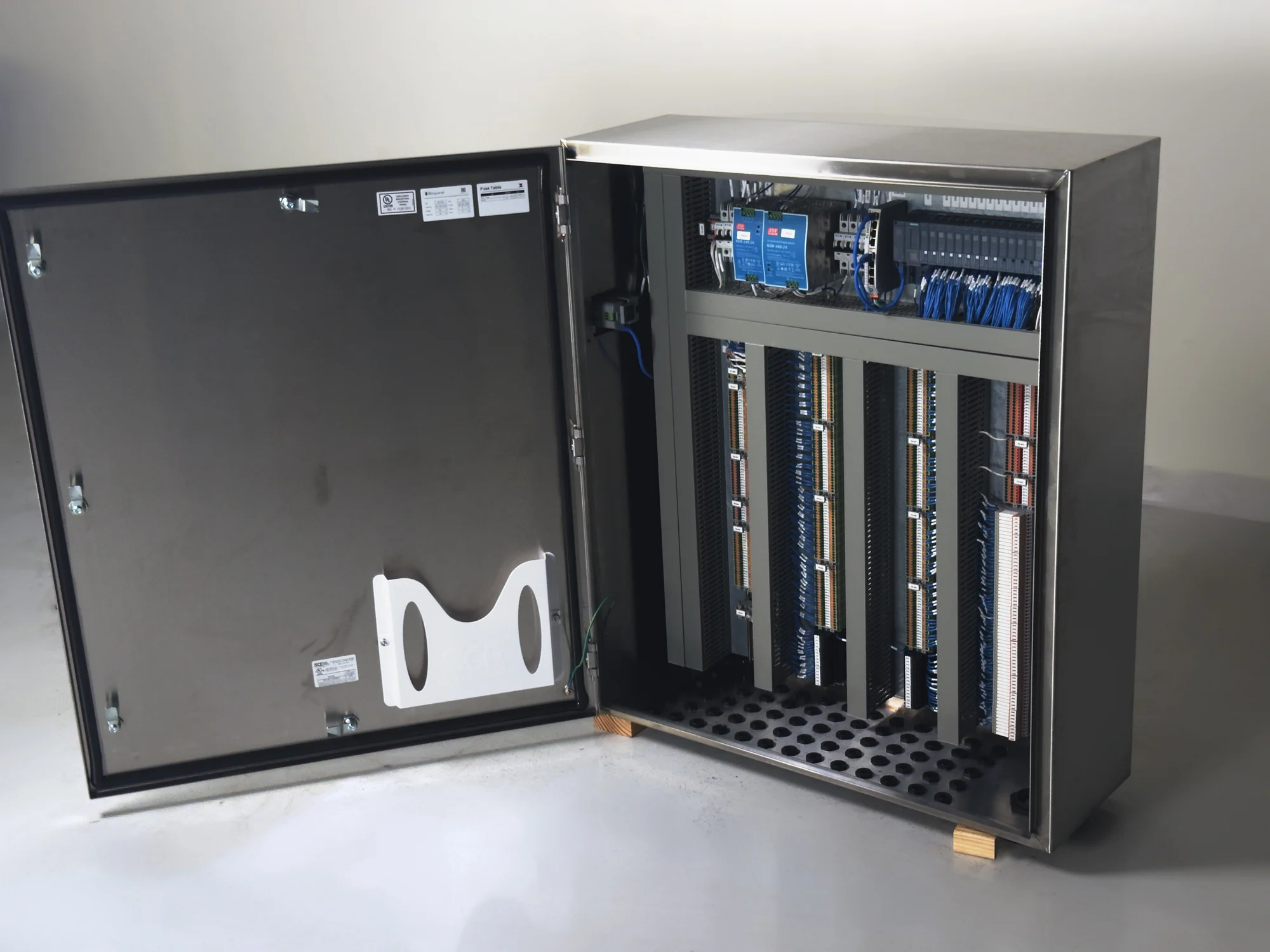
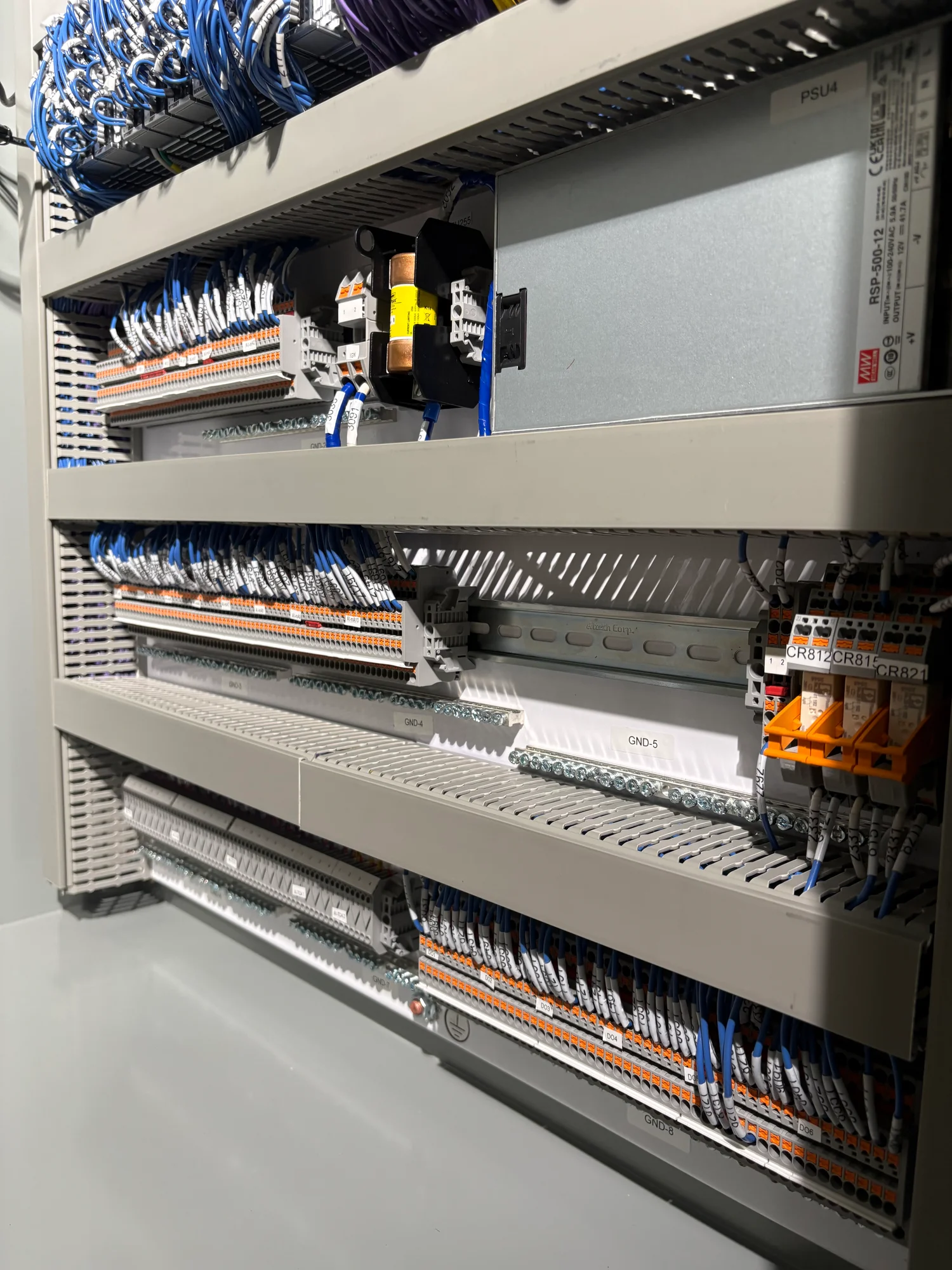
Propulsion test panel and junction box
A dedicated data-acquisition and control panel and separate field junction box for cryogenic propulsion testing.
- Application
- propulsion test instrumentation and control interfaces
- Scope
- one DAQ panel and one junction box
- I/O platform
- Beckhoff EtherCAT
- Interfaces
- analog measurements, thermocouples, load cells, and digital outputs
Orbital Operations develops in-space mobility vehicles powered by cryogenic propulsion systems.
To support propulsion testing, Orbital’s team defined the instrumentation and equipment interfaces required to measure pressures, temperatures, and thrust, command valves, and operate ignition hardware. They partnered with us to translate those requirements into a dedicated data-acquisition and control panel and a separate field junction box.
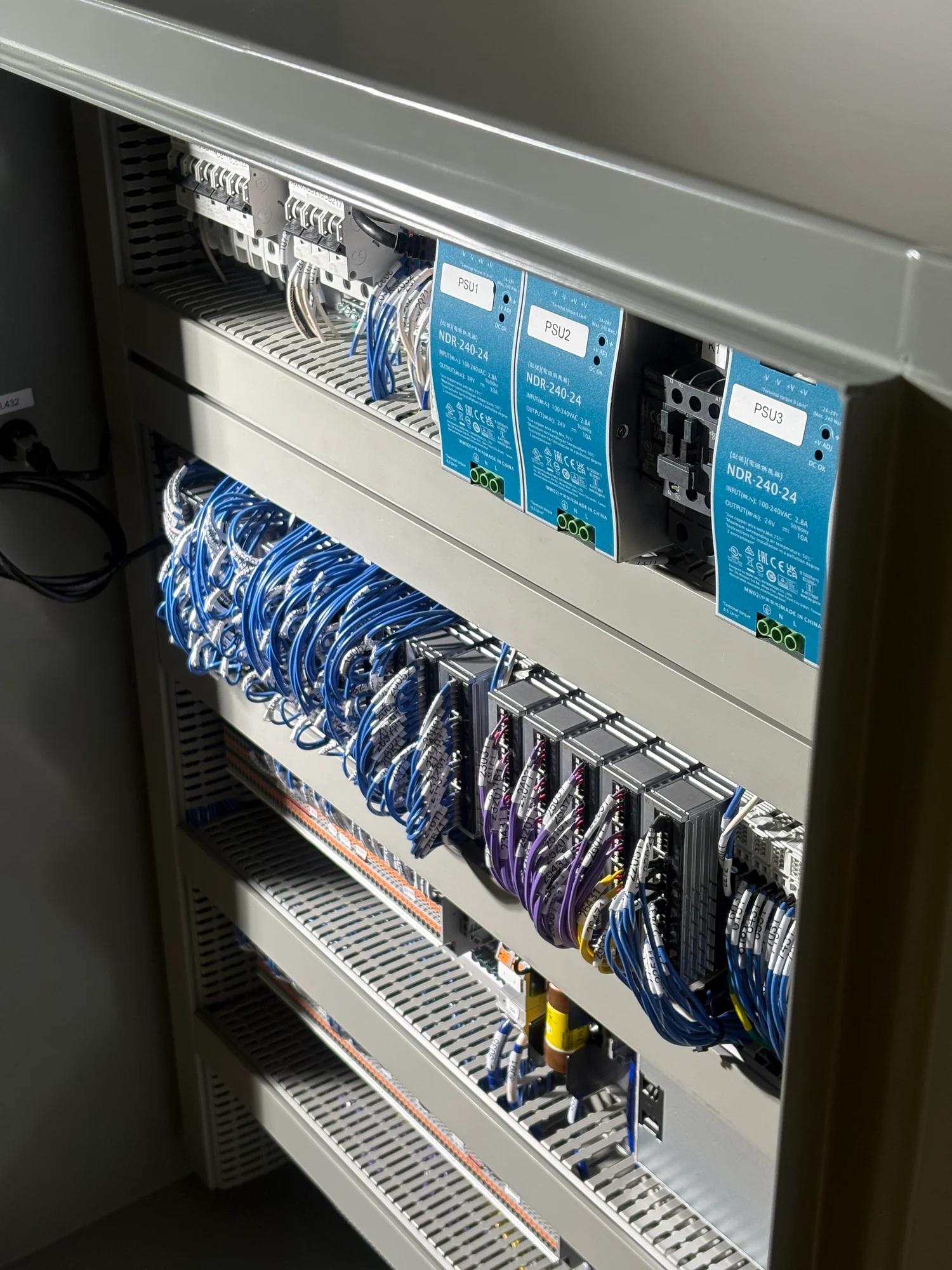
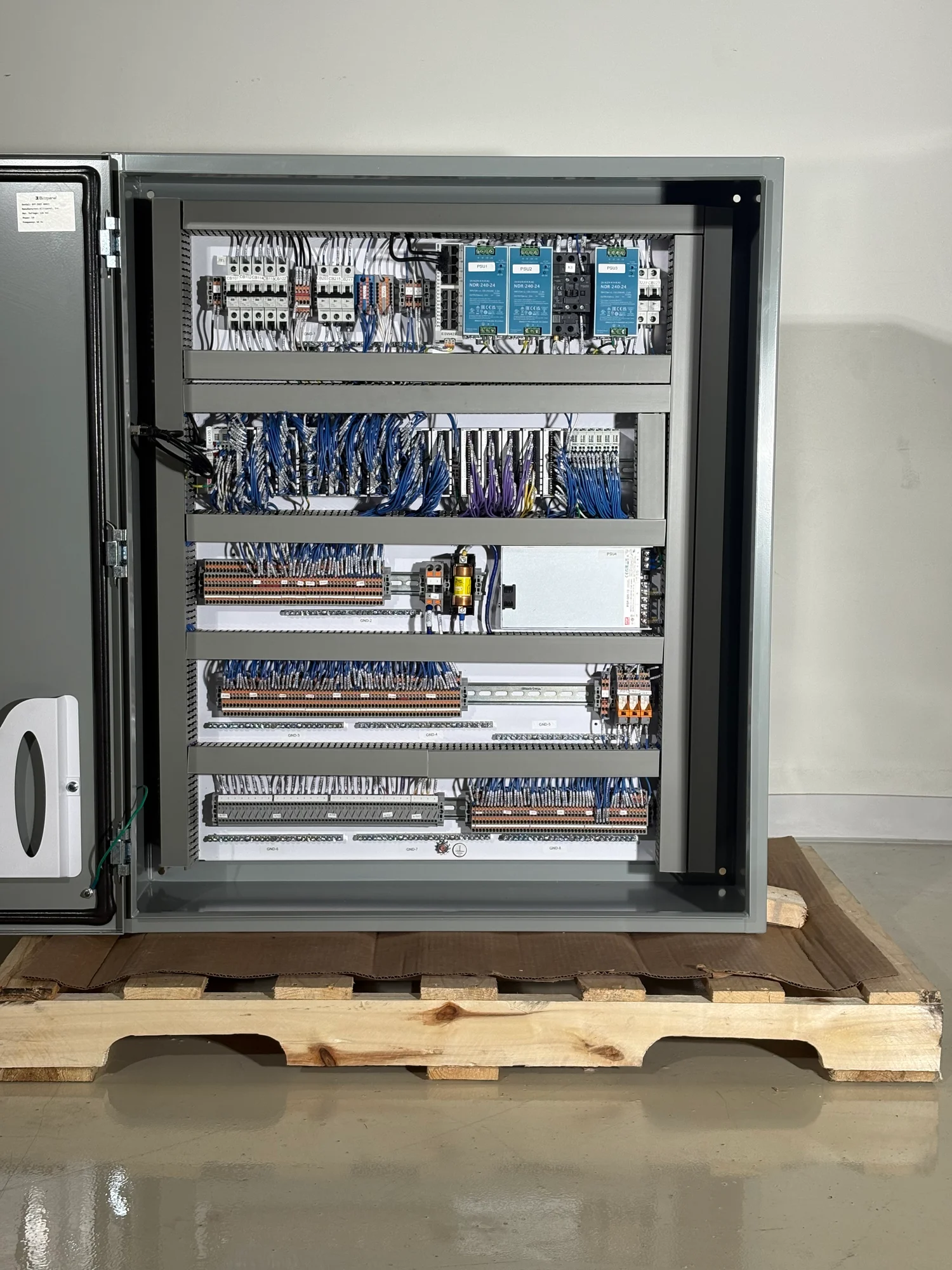
We designed and built the assemblies around Beckhoff EtherCAT hardware, integrating power distribution, circuit protection, measurement inputs, and equipment-command outputs. Labeled field connections and accompanying electrical documentation provide defined interfaces between the panels and Orbital’s test equipment.
A 35A ignition load
During design review, we asked Orbital to confirm the glow plug's load. It needed 12VDC at roughly 35A for 10 to 15 seconds, and the team wanted some headroom in the supply.
That answer set the ignition supply and switching requirements. We used a dedicated 12V, 41.7A supply and a contactor to switch the load. The Beckhoff output commands the contactor; the glow-plug current takes a separate power path.
Connecting the test equipment
Three 24V supplies serve the Beckhoff hardware, instrumentation, and solenoid loads. We matched the input modules to the measurements: current signals from pressure transmitters, thermocouples for temperature, and bridge inputs for load cells that measure force. Digital and analog outputs provide the equipment commands.
The junction box provides labeled terminals for the instrument, valve, and ignition connections. Both assemblies came with circuit drawings, layouts, terminal-strip drawings, and field wiring lists. Together, the cabinets and drawings give Orbital defined connection points for the equipment on its test-system list.
“Our team brought the propulsion test requirements, and they helped translate those into a practical, well-documented electrical system. They worked through the details with us, identified requirements early, and delivered panels that support the way we need to test.”