Robotics

Aseon Labs
Builds robotic stations that charge, clean, and inspect autonomous vehicles.
Power and safety for a robotic pod
The vacuum and compressor needed to stop on an emergency stop. The electrically operated doors needed to remain operable.
- Application
- robotic servicing pod for autonomous vehicles
- Scope
- one power-distribution and safety panel
- Incoming power
- three 120VAC supplies and one 120/240VAC supply
- Enclosure
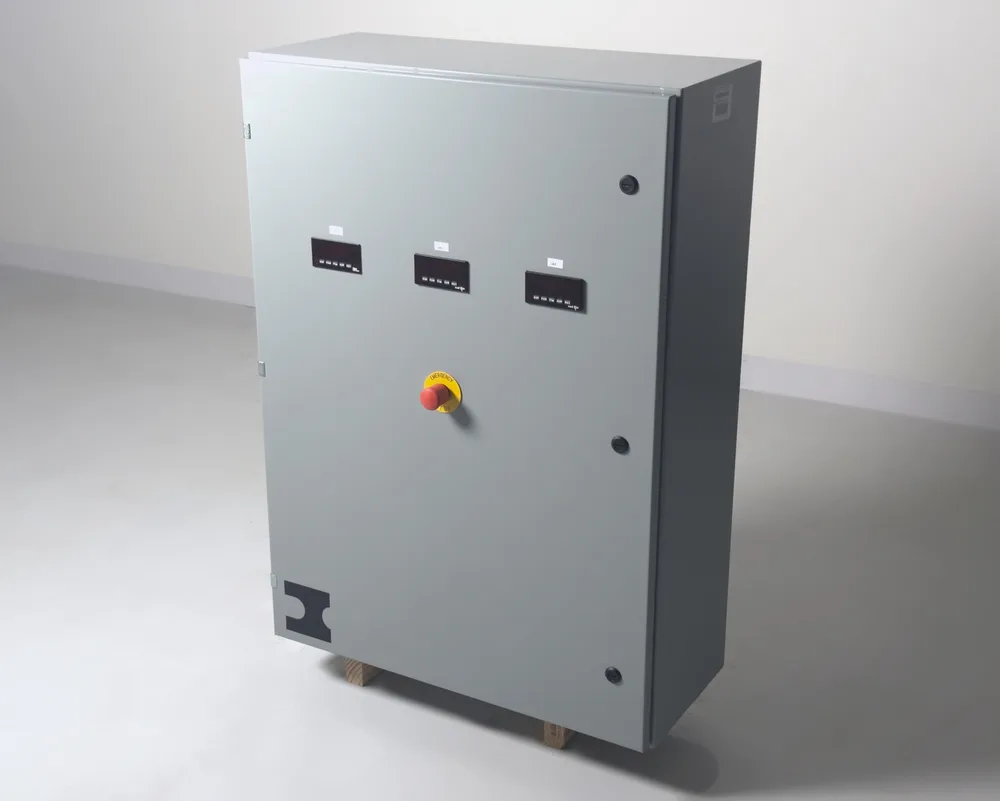
- NEMA 12, 48 x 30 x 12 inches
- Control
- dual-channel safety relay with monitored reset
Aseon builds robotic stations that service autonomous vehicles. Its pod combines robot controllers, a vacuum, a compressor, electrically operated doors, and cameras. Those loads couldn't all respond the same way to an emergency stop.
We designed and built the pod's power distribution and hardwired safety interfaces. Aseon handles the pod equipment, installation, and software. The agreed scope puts powered emergency-stop and reset checks at site commissioning, with the panel connected to the pod.
The doors needed their own circuit
Aseon's revised specification explained that preventing door operation during an emergency stop could create an unsafe situation. The doors needed to remain operable while the vacuum and compressor stopped.
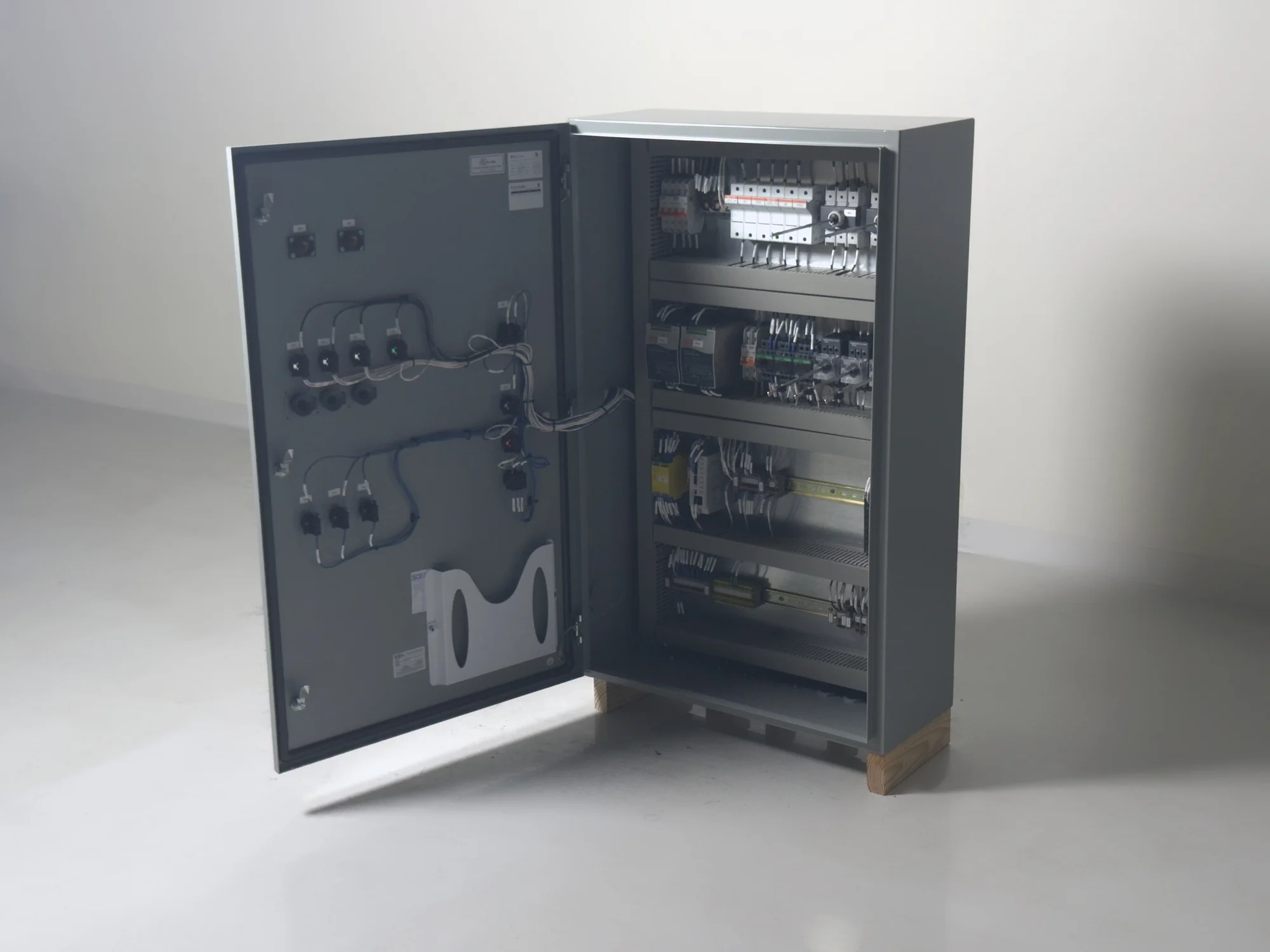
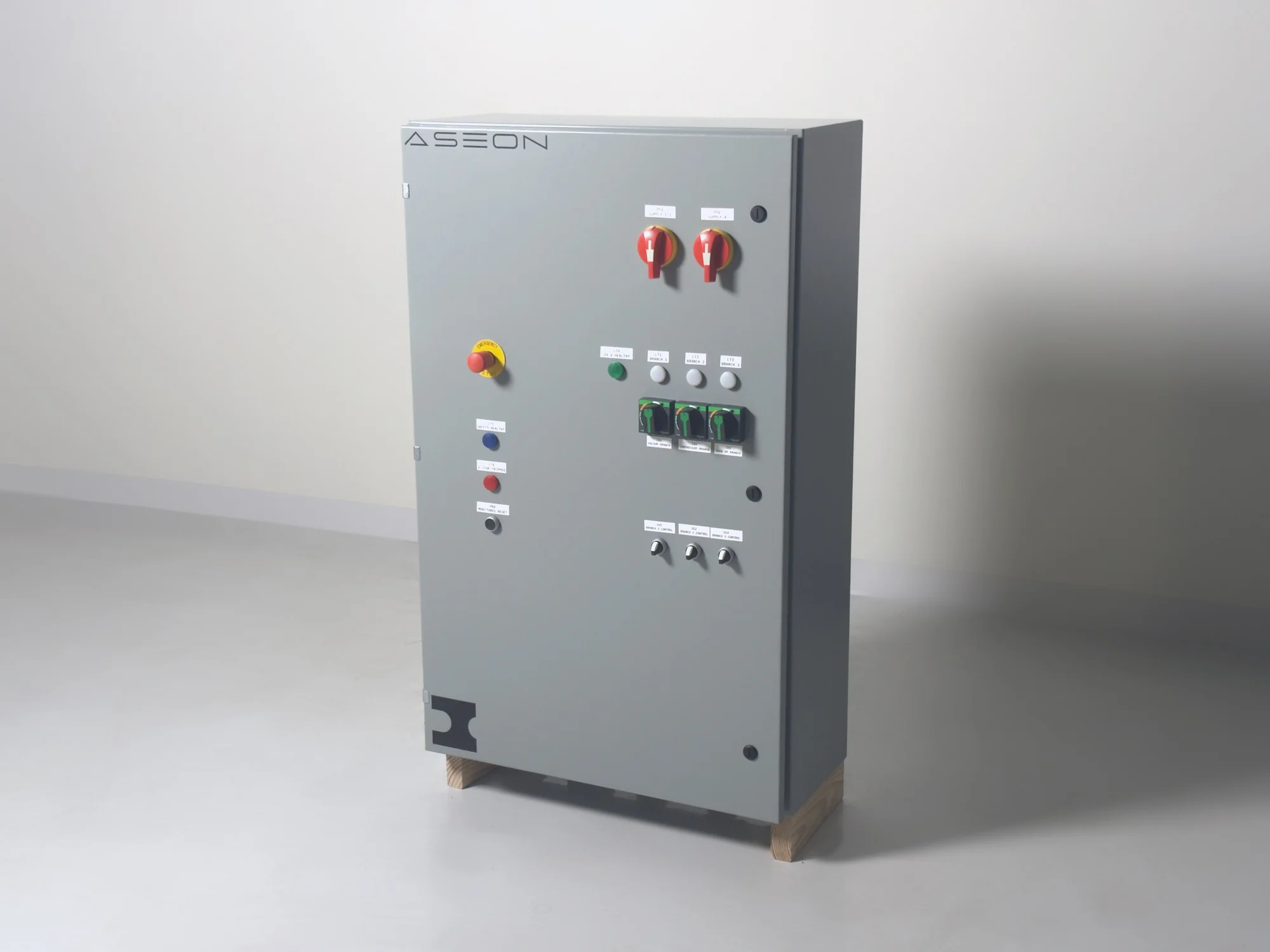
We put the vacuum and compressor contactor coils through the safety relay. The door-motor contactor has its own front-panel switch and stays outside that shutdown path.
The relay also provides the robot-controller safety interfaces. A front-panel reset button has three separate contact sets: one for the relay's monitored manual reset and one for each robot controller's reset circuit. The robot resets use dry contacts that switch each controller's own 24V supply.
Four supplies, separate isolation points
Three 120VAC supplies serve the vacuum, compressor, and doors. A fourth, 120/240VAC split-phase supply feeds the two robot controllers and auxiliary supplies.
During design review, Aseon confirmed that each robot controller should receive 120V line-to-neutral, one from each line. The auxiliary supplies use 240V line-to-line. One lockable handle isolates the vacuum, compressor, and door supplies; the other isolates the split-phase supply.
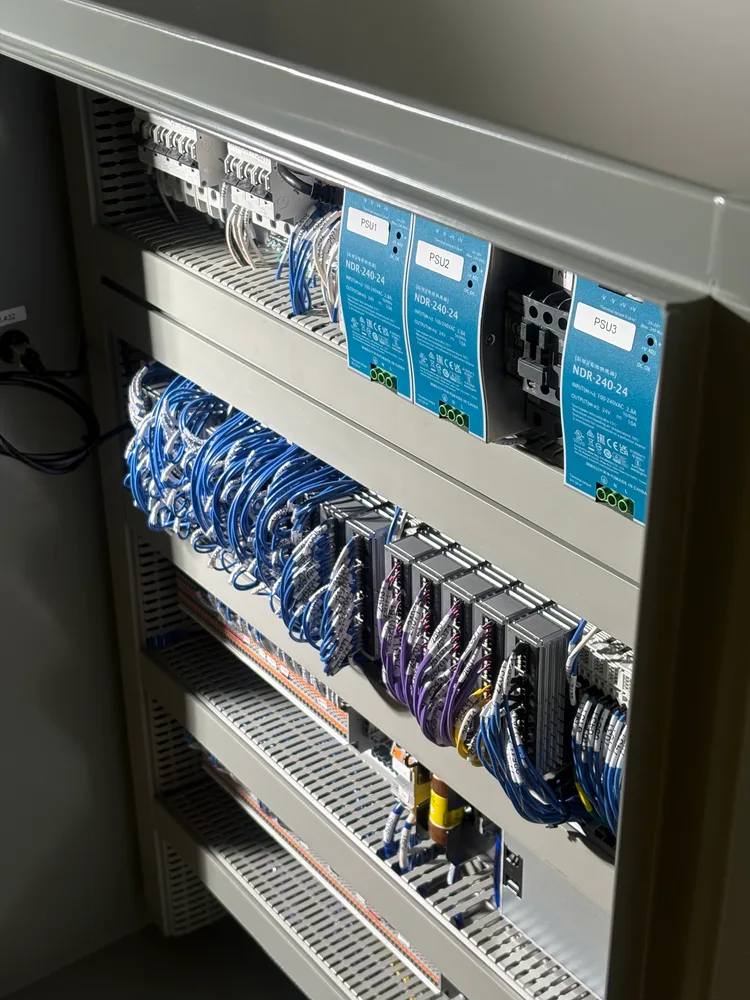
The cabinet also provides protected 24VDC control circuits and a separate supply for the PoE network switch and cameras. Incoming supply cables use cord grips; pod cables enter through split-grommet frames. We supplied the completed assembly with as-built drawings and connection lists for wiring it into the pod.