Material Hybrid
Status
Post Idea
Owner
John Doe A.
Post Date
Jan 24, 2026
Platform
Abc Testing
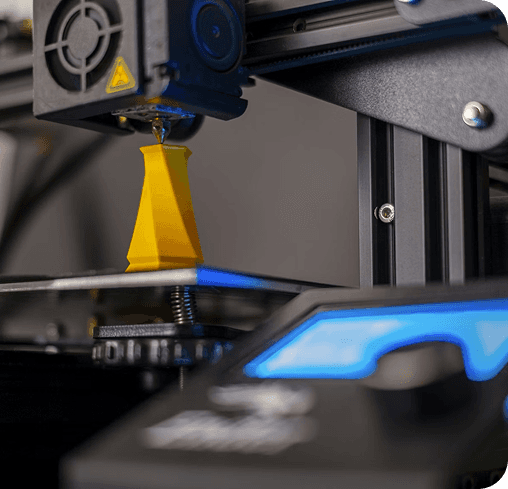
Material Hybrid | Advanced Manufacturing / Battery 3D Printing
The Challenge
Material Hybrid had built a prototype power distribution panel for their experimental battery 3D printer but faced a critical decision: either engineer the system themselves (diverting the team from core battery innovation) or find a partner who could handle the electrical complexity at speed. Lead time and design bandwidth were both constraints.
Panel Specifications
4kW total power distribution capacity
Multi-voltage output: 5V DC, 24V DC, 80V DC rails
AC distribution: 220V and 110V rails
Complete safety subsystem: redundant contactors, safety relay, e-stop
EMI filtering and circuit protection
IP-rated industrial enclosure
How Blitzpanel Helped
Material Hybrid provided requirements and we translated them into a complete, manufacturable design within one week. We handled all electrical specifications, compliance validation, and manufacturing coordination. This freed their engineering team to focus entirely on battery chemistry and printer mechanics.
The Results
Design-to-spec: Complete electrical design in 1 week, eliminating 4-6 week engineering diversion
Complexity absorbed: Safety subsystems, EMI filtering, and multi-voltage distribution fully specified and validated
Team focus: Core engineering team stays on battery innovation, not controls rabbit holes
System reliability: Professional electrical design reduces field failures and supports rapid iteration cycles

They handled all the electrical complexity so we could stay focused on the battery innovation.
For hardware companies building next-generation systems, control panels are essential but can derail timelines. Treating panel design as an outsourced service means your best engineers focus on core innovation, not electrical logistics. This compounds over the product lifecycle—you ship faster, iterate faster, and control the roadmap.
